
Organic Acids Test Case Study

When Energy Metabolism Isn’t Working Properly
Many people seek functional medicine care because their symptoms do not fully match what standard lab tests show. They may experience fatigue, brain fog, mood instability, or difficulty focusing, yet their conventional labs appear “normal.” This can be frustrating for both patients and providers. Functional testing sometimes provides additional insight into what may be happening beneath the surface.
One test I often use in clinical practice is the Organic Acids Profile (OAP), which looks at metabolic byproducts in urine. These compounds can reflect how the body is processing energy, nutrients, neurotransmitters, and environmental exposures. In this case study, we will walk through several markers from an Organic Acids Profile and what they suggested about energy production, mitochondrial function, and nervous system demand.
All case details and lab images shared here have been fully de-identified and are presented for educational purposes.
The Symptoms
This individual came to the clinic with symptoms that included:
• persistent fatigue
• brain fog
• difficulty maintaining focus
• periods of nervous system overstimulation
• energy crashes throughout the day
Previous routine lab testing did not reveal a clear explanation. Because these symptoms often involve metabolism and nervous system function, we decided to look deeper using an Organic Acids Profile.
Pattern 1: Elevated Lactate and D-Lactate
The first pattern that stood out involved markers related to glycolysis, one of the body’s primary energy pathways.

Two markers were significantly elevated:
• Lactic acid
• D-lactic acid
When lactate levels rise, it often suggests that cells are relying more heavily on glycolysis, a faster but less efficient energy pathway.
Ideally, glucose moves through mitochondrial metabolism to produce energy efficiently. When that system is under stress or lacking key cofactors, the body may compensate by increasing glycolysis, which leads to higher lactate levels.
D-lactate can also be influenced by microbial activity in the gut, as certain bacteria produce this compound during fermentation.
For some individuals, elevated levels may contribute to symptoms such as:
• brain fog
• fatigue
• cognitive fluctuations
• nervous system sensitivity
Pattern 2: Krebs Cycle Congestion
The next pattern involved markers related to the Krebs cycle, a central part of mitochondrial energy production.

Several intermediates in this cycle were elevated, including:
• cis-aconitic acid
• succinic acid
• malic acid
When multiple Krebs cycle markers accumulate, it can suggest that the cycle is not moving efficiently.
This does not necessarily mean the mitochondria are failing, but it can indicate that the system is under strain or lacking sufficient nutrient cofactors for optimal enzyme activity.
Many mitochondrial enzymes depend on nutrients such as:
• vitamin B1
• vitamin B2
• vitamin B3
• vitamin B5
• magnesium
• lipoic acid
Supporting these pathways can sometimes help improve metabolic flow and energy production.
Pattern 3: Nervous System and Neurotransmitter Demand
The Organic Acids Profile also provides markers related to neurotransmitter metabolism and stress physiology.
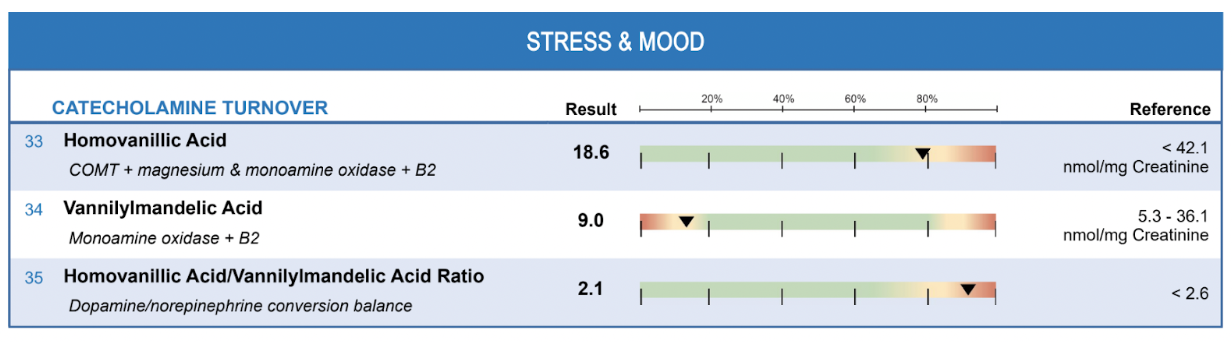
These markers help provide clues about how the body is producing and breaking down catecholamines such as dopamine and norepinephrine.
In this case, the pattern suggested increased nervous system demand and neurotransmitter turnover.
This type of pattern is often seen in individuals experiencing:
• chronic stress
• neurodivergent conditions
• high cognitive demand
• metabolic strain
When the nervous system is working harder to maintain balance, it can contribute to symptoms like:
• irritability
• mental fatigue
• mood fluctuations
• difficulty sustaining attention
Why Functional Lab Testing Can Change the Strategy
When several metabolic markers point toward mitochondrial stress and inefficient energy production, the clinical strategy often shifts.
Instead of focusing only on symptoms, we can begin supporting the underlying systems involved in energy production, nervous system function, and metabolic balance.
Depending on the individual case, this may include strategies that support:
• mitochondrial metabolism
• nutrient cofactors
• gut microbial balance
• nervous system regulation
The goal is not simply to treat a lab result, but to understand how the physiology behind the symptoms may be functioning.
The Bigger Picture
Functional lab tests like the Organic Acids Profile are only one piece of the puzzle.
However, when these markers are interpreted alongside symptoms, medical history, and clinical context, they can provide valuable clues about what the body may need most.
For individuals experiencing persistent fatigue, cognitive fluctuations, or nervous system stress, deeper metabolic testing can sometimes reveal patterns that standard labs miss.
And in many cases, those patterns help guide a more personalized and effective strategy forward.

When Deeper Testing Makes Sense
If you’ve been experiencing symptoms such as persistent fatigue, brain fog, mood fluctuations, or difficulty maintaining focus, it can be frustrating when standard lab tests don’t provide clear answers. Functional lab testing can sometimes uncover patterns that help explain why symptoms are happening. Tests like the Organic Acids Profile can provide insight into areas such as:
• mitochondrial energy production
• neurotransmitter metabolism
• nutrient cofactors
• gut microbial activity
• environmental exposures
These patterns can help guide more personalized strategies rather than relying on guesswork.
Want to Explore Functional Lab Testing?
If you’re curious whether deeper metabolic testing might be helpful in your situation, there are a few ways to start.
You can:
• Learn more about the 3-Month Functional Lab Package, which includes the Organic Acids Test and personalized interpretation
• Schedule a discovery call to discuss whether functional lab testing makes sense for your symptoms
• Or explore additional resources on the blog
