
Two people can have the same diagnosis, the same symptoms on paper, and a completely different biochemical picture underneath.
Same ADHD diagnosis. Different genetic variants. Different neurotransmitter patterns. Different nutrient needs. Different responses to the same intervention. This is something I see in clinical practice and it is something the research is increasingly confirming. Genetics does not cause ADHD or PMDD. But genetics shapes the terrain those conditions play out on. And understanding that terrain changes what it is possible to do about it.
This post is an introduction to how I think about genetics in clinical practice — not as a fixed sentence, but as a roadmap.
What Genes Actually Do (and Do Not Do)
Genetics in the wellness space tends to get oversimplified in two directions. Either genes are treated as destiny, you have the variant, you have the disease, nothing can be done, or they are dismissed entirely in favor of lifestyle factors alone.
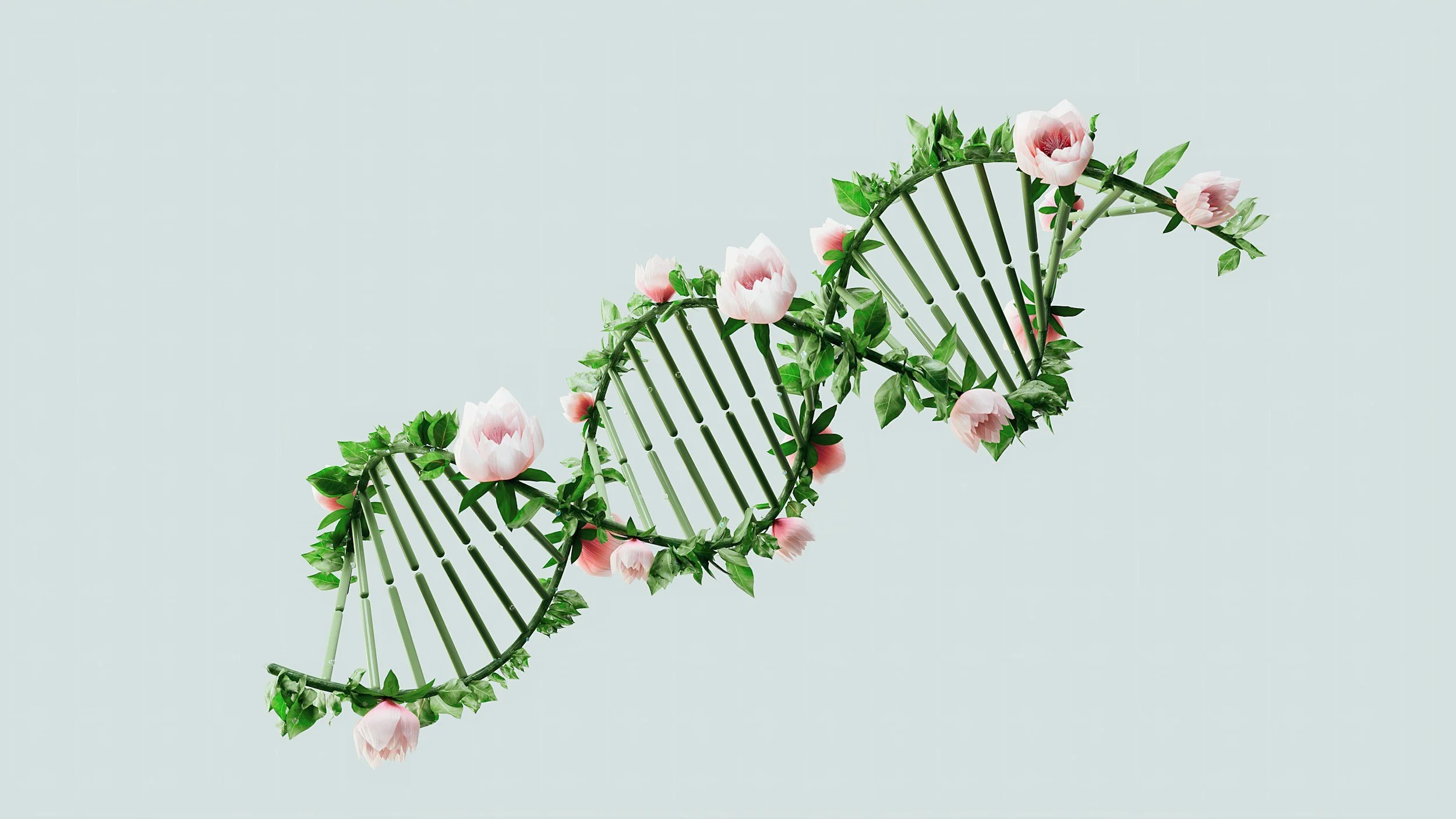
Neither framing is accurate.
Genes encode instructions for proteins. Those proteins carry out biological functions: building neurotransmitter receptors, metabolizing nutrients, regulating inflammatory responses, supporting synaptic structure. When a gene has a variant, a single nucleotide polymorphism, or SNP — the protein it produces may work slightly differently. Not broken, not necessarily dysfunctional. Just different.
What that difference means in your body depends on what else is happening. Nutrient status, gut health, stress load, inflammation, sleep, and environmental exposures all interact with genetic expression. This is the field of nutrigenomics: the study of how nutrition and environment modulate how genes express themselves.
The practical takeaway is this: a genetic variant is not a diagnosis. It is a signal that a particular system may need more support, closer monitoring, or a different approach than what works for someone with a different genetic picture.
Why This Matters for ADHD and PMDD
ADHD and PMDD are both conditions rooted in neurotransmitter regulation, hormonal sensitivity, and nervous system function. They are also conditions where two people with the same diagnosis can respond completely differently to the same treatment — whether that is a supplement protocol, a dietary change, or a medication.
Part of that variability is genetic.
The dopamine connection
The dopamine receptor D3 gene, DRD3, is a good example of how genetics cuts across diagnostic categories. The rs167771 variant has been associated with neurodevelopmental conditions including ASD and is specifically linked to rigid, repetitive behavior patterns. Notably, DRD3 was originally investigated as an ADHD candidate gene — the genetic overlap between these conditions is real (Staal, 2015).
Dopamine regulation is central to both. The specific receptor variants a person carries shape how dopamine signals are received and processed. That does not change with a diagnostic label.
The oxytocin pathway
The oxytocin gene, OXT, and its receptor, OXTR, influence social cognition, emotional processing, and stress regulation. Genetic variation in OXT has been associated with differences in plasma oxytocin levels and with variation in how the amygdala processes emotional information (Waye & Cheng, 2018).
For women with ADHD and PMDD, this is more than a social behavior story. Oxytocin interacts with the stress response system and with the hormonal fluctuations of the menstrual cycle. Differences in oxytocin signaling may contribute to the emotional dysregulation, rejection sensitivity, and heightened stress reactivity that many women in this population experience but struggle to explain.
NF1 and the ADHD-neurodevelopmental overlap
The NF1 gene modulates Ras signaling, which affects neuronal growth and connectivity. Mutations in NF1 are classically associated with neurofibromatosis type 1, but NF1 variants also carry a strong comorbidity with ADHD symptoms (Waye & Cheng, 2018). This is part of a larger pattern in the genetics literature: the genes associated with one neurodevelopmental condition frequently overlap with genes associated with others. ADHD, ASD, anxiety, and learning differences share more genetic architecture than their separate diagnostic categories suggest.
Nutrient metabolism genes
Beyond neurotransmitter genes, variants in genes that govern how the body processes nutrients matter enormously in functional medicine practice. MTHFR variants affect folate metabolism and methylation. COMT variants affect how the body breaks down dopamine, epinephrine, and norepinephrine. These metabolic genes do not cause ADHD or PMDD, but they shape nutrient needs, medication responses, and the effectiveness of supplementation strategies.
A person with a COMT variant that slows dopamine breakdown may experience stimulant medications differently than someone without it. A person with an MTHFR variant may not respond to standard folic acid the way the research predicts, depending on the broader biochemical context — because their body may not efficiently convert it to the active form the brain uses.
This is why personalized matters.
Genetics Does Not Replace Functional Lab Testing
Genetic information is most useful when it is paired with functional lab data. Knowing a person carries an MTHFR variant tells you something about their methylation potential. Actually measuring their folate, homocysteine, and organic acid markers tells you what is happening in their body right now.
Genes are the blueprint. Labs show you how the building is actually standing.
This is not a theoretical distinction. Research using urine organic acid testing in children with ASD has identified measurable metabolic signatures — including disruptions in amino acid metabolism, Krebs cycle function, mitochondrial activity, and gut microbial markers — that genetic analysis alone would not detect (Chen et al., 2019). The same child who carries a genetic variant associated with neurodevelopmental risk may or may not show the downstream metabolic consequences of that variant. Testing tells you which is true for that individual.
I use genetic information as one layer in a broader clinical picture — alongside organic acid testing, GI assessment, blood chemistry, and a detailed symptom history. The goal is not to manage a gene list. It is to understand the specific biochemical patterns driving symptoms and address them with precision.

What This Means Going Forward
I have been planting seeds about genetics in several posts over the past few weeks, why two people with ADHD can have completely different root causes, why iron and dopamine interact the way they do, why magnesium metabolism is not the same for everyone.
Genetics is the thread running through all of it.
Over the coming months, I will be introducing genetics-informed care as a formal part of how I work with clients. This means incorporating genetic analysis alongside functional lab testing to build a more complete picture of each person's biochemistry, not to predict disease, but to understand what their system needs to function well.
If you have been reading these posts and thinking "this sounds like me but nothing has ever connected the dots," genetics may be part of what has been missing.
Want to Learn More About Whether This Applies to You?
The best place to start is a conversation. A discovery call gives us the chance to look at your history, your symptoms, and where you are right now and figure out whether genetics-informed functional medicine is the right next step.
References
Chen, Q., Qiao, Y., Xu, X. J., You, X., & Tao, Y. (2019). Urine organic acids as potential biomarkers for autism-spectrum disorder in Chinese children. Frontiers in Cellular Neuroscience, 13, 150. https://doi.org/10.3389/fncel.2019.00150
Staal, W. G. (2015). Autism, DRD3 and repetitive and stereotyped behavior, an overview of the current knowledge. European Neuropsychopharmacology, 25(9), 1421–1426. https://doi.org/10.1016/j.euroneuro.2014.08.011
Waye, M. M. Y., & Cheng, H. Y. (2018). Genetics and epigenetics of autism: A review. Psychiatry and Clinical Neurosciences, 72(4), 228–244. https://doi.org/10.1111/pcn.12606
Masini, E., Loi, E., Vega-Benedetti, A. F., Carta, M., Doneddu, G., Fadda, R., & Zavattari, P. (2020). An overview of the main genetic, epigenetic and environmental factors involved in autism spectrum disorder focusing on synaptic activity. International Journal of Molecular Sciences, 21(21), 8290. https://doi.org/10.3390/ijms21218290
