
On Thyroid Medication but Still Exhausted? Here Is What Nobody Checked.
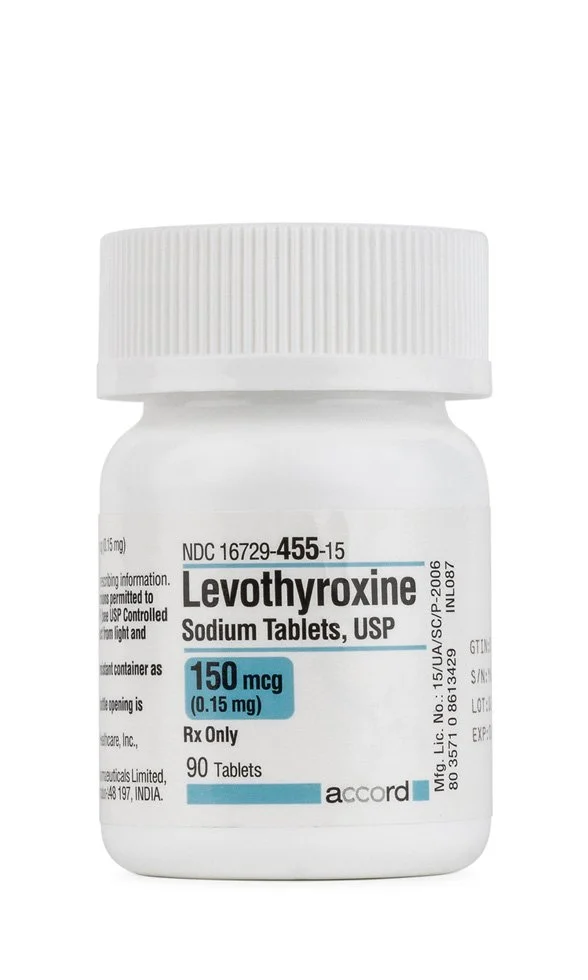
You have been on levothyroxine for years. Your TSH comes back normal at every check. Your doctor says your thyroid is well-managed.
And yet you are still exhausted. Your hair is still thinning. Your brain still feels slow. You still cannot lose weight. You still wake up feeling like you need another eight hours.
This is one of the most common presentations I see in clinical practice. And there is almost always a reason, usually several, that nobody investigated.
Being on thyroid medication does not mean your thyroid is functioning optimally. It means your TSH is being managed. Those are meaningfully different things.
What Levothyroxine Actually Does
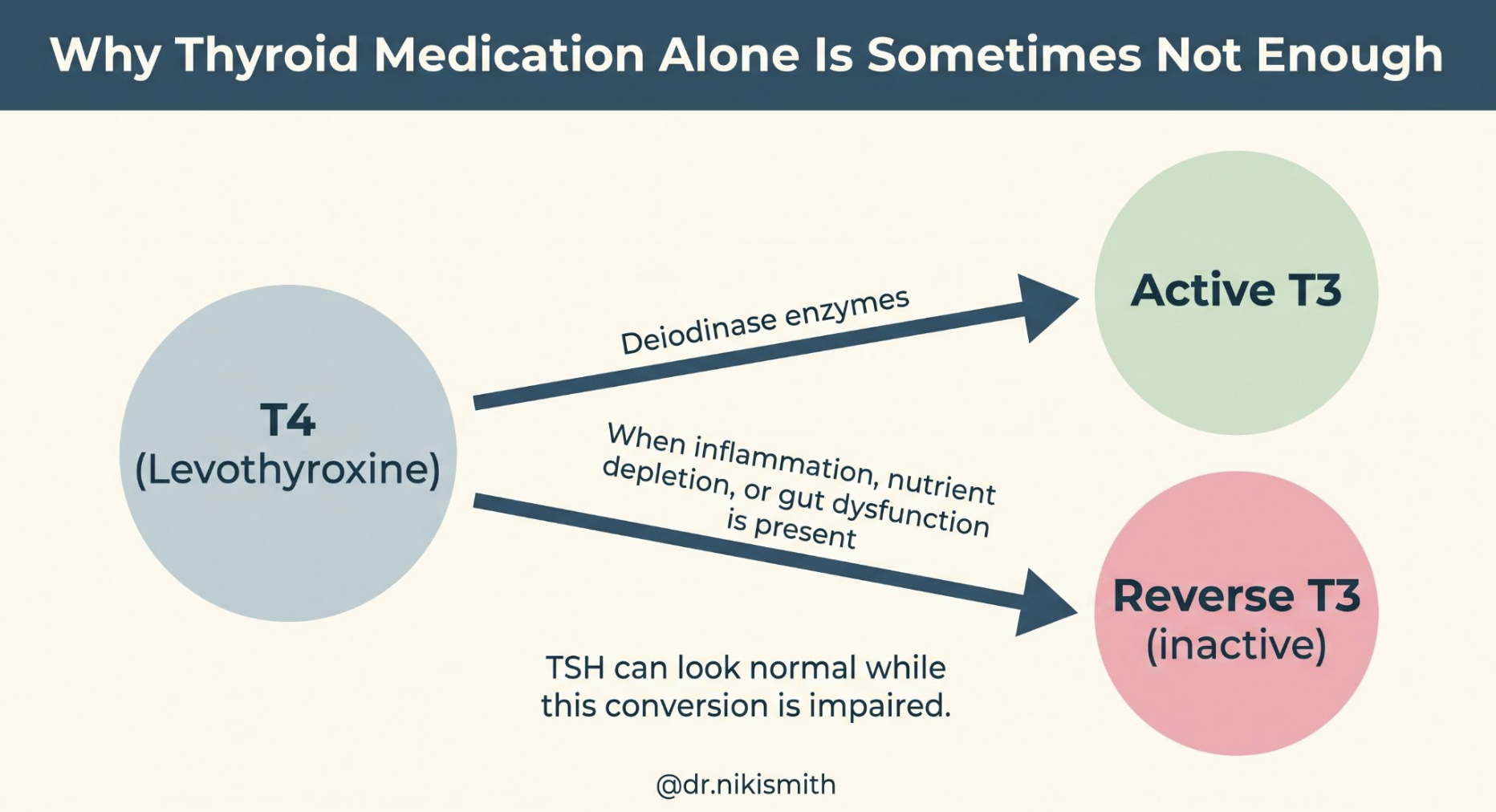
Levothyroxine is a synthetic form of T4, the storage hormone your thyroid produces. Most people are prescribed levothyroxine because it replenishes T4 levels and, for most people, the body converts enough of that T4 into active T3 to feel well.
T3 is the hormone that actually does the work. It enters your cells and drives energy production, metabolism, body temperature, cognitive function, mood, and heart rate. T4 is largely inactive on its own. It has to be converted.
The conversion happens through enzymes called deiodinases. These enzymes can convert T4 into active T3, or they can convert T4 into reverse T3, an inactive form that does not have the same effect on cells. The balance between these two outcomes is not fixed. It is influenced by inflammation, nutritional status, gut health, and other variables that levothyroxine alone does not address (Köhrle and Frädrich, 2022).
For an estimated 5 to 15 percent of people on levothyroxine, persistent symptoms remain even with a normal TSH. A 2024 Lancet review on hypothyroidism acknowledged this subgroup specifically, noting that the reasons are not fully understood and likely multifactorial (Taylor et al., 2024). This is not a fringe observation. It is documented in mainstream endocrinology.
Why T4-to-T3 Conversion Can Be Impaired
Several well-documented factors shift the conversion balance away from active T3 and toward inactive reverse T3. Understanding these factors is where the clinical picture often starts to make sense.
Inflammation
This is the most significant and best-documented driver of impaired T4-to-T3 conversion. Pro-inflammatory cytokines including TNF-alpha, IL-1 beta, and IL-6, the same inflammatory messengers elevated in autoimmune conditions, chronic infections, and gut dysbiosis, inhibit the deiodinase enzymes responsible for T4-to-T3 conversion. When inflammation is chronically elevated, less active T3 is produced from available T4 (Moura Neto and Zantut-Wittmann, 2016).
For someone with Hashimoto's thyroiditis, an active autoimmune process is producing ongoing inflammatory signaling that directly affects the conversion picture. Managing TSH with levothyroxine does not turn off the autoimmune inflammation. It replaces the hormone being lost but does not address what is driving the immune activity.
Selenium and zinc deficiency
The deiodinase enzymes that convert T4 to T3 are selenoproteins, meaning they require selenium as a structural component. When selenium is insufficient, deiodinase activity is reduced and T4-to-T3 conversion decreases. This can result in elevated T4 with inadequate active T3, even when TSH appears normal (Shulhai et al., 2024).
Zinc plays a parallel role as a cofactor for deiodinase enzymes and for thyroid hormone receptor binding. Even if T3 is available in circulation, zinc deficiency can impair how effectively thyroid hormones bind to their receptors in target cells, reducing the cellular response to available hormone (Shulhai et al., 2024).
Both selenium and zinc are among the nutrients most commonly depleted in people with Hashimoto's and thyroid dysfunction, and both are routinely absent from standard thyroid panels.
Gut health and the gut-thyroid connection

The relationship between gut health and thyroid function is bidirectional and increasingly well-documented. Gut bacteria participate in thyroid hormone metabolism in several specific ways.
The liver packages used thyroid hormones for excretion. Gut bacteria produce enzymes that deconjugate these packages, allowing some thyroid hormone to be reabsorbed rather than excreted. This enterohepatic recycling affects total thyroid hormone availability. Gut dysbiosis can disrupt this recycling process (Fenneman et al., 2023).
Gut bacteria also directly affect the absorption of thyroid medication. Dysbiosis, intestinal inflammation, and compromised gut barrier function have all been associated with altered levothyroxine absorption, meaning some patients may require higher doses not because their thyroid needs change but because their gut is absorbing the medication inconsistently (Fenneman et al., 2023).
Additionally, gut dysbiosis contributes to systemic inflammation, and as described above, inflammation is a primary driver of impaired T4-to-T3 conversion. Multiple studies have documented differences in gut microbial composition in patients with Hashimoto's compared to healthy controls, with consistent findings of reduced diversity and altered patterns of butyrate-producing bacteria (Jiang et al., 2025).
Iron and ferritin
Iron is the central atom in thyroid peroxidase, the enzyme responsible for thyroid hormone synthesis. Without adequate iron, hormone synthesis is impaired at the production level. Several studies have found lower free T3 and free T4 in individuals with iron deficiency, with hemoglobin and serum iron showing positive correlations with thyroid hormone levels (Shulhai et al., 2024).
For someone on levothyroxine, low ferritin can compound the picture. If the gut is not absorbing medication consistently and conversion is impaired by selenium or zinc deficiency, adding inadequate iron to the picture creates multiple compounding factors that TSH alone cannot capture.
What About Reverse T3?
The concept of reverse T3 and functional hypothyroidism is widely discussed in functional medicine. Here is an honest summary of where the evidence stands.

Reverse T3 is a real biological phenomenon. When the body is under significant stress, inflamed, or ill, deiodinase enzymes shift production toward reverse T3 rather than active T3. This is well-documented in the research literature and is sometimes called euthyroid sick syndrome or low T3 syndrome (Moura Neto and Zantut-Wittmann, 2016).
However, the clinical utility of routinely testing and treating based on reverse T3 levels is not supported by mainstream endocrinology guidelines. The American Thyroid Association has stated that outside of rare specific conditions, measuring reverse T3 is not useful for guiding treatment in most clinical situations (Van Uytfanghe et al., 2023). The claim that elevated reverse T3 blocks active T3 at receptors is biologically plausible but not conclusively established in human clinical research.
The more clinically actionable approach is to identify and address the drivers that push conversion toward reverse T3 in the first place: inflammation, nutrient insufficiency, gut dysfunction, and chronic stress. Treating the upstream contributors is more supported by evidence than treating reverse T3 as a standalone target.
What a More Complete Thyroid Workup Looks At
A standard thyroid panel typically includes TSH and sometimes free T4. A more complete functional assessment adds:
Free T3: the active hormone that enters your cells — not just the storage form
Reverse T3: useful for understanding the conversion picture in context, even if treatment decisions should not rest on it alone
TPOAb and TgAb: autoimmune antibody markers that indicate whether an active autoimmune process is present and how aggressively it may be affecting tissue
Selenium: via serum selenium or selenoprotein P
Zinc: serum or RBC zinc for a more functional assessment
Vitamin D: directly affects immune regulation and TPO antibody levels in Hashimoto's
Full iron panel: ferritin, serum iron, TIBC, transferrin saturation — not just ferritin alone
CRP or inflammatory markers: essential for interpreting the conversion and ferritin picture in the presence of autoimmune activity
Gut health assessment: microbiome testing or organic acids markers that reflect gut barrier function and microbial health
None of the nutrient markers in this list are standard components of a thyroid panel. Yet each of them directly influences how well available thyroid hormone is produced, converted, and used by your cells.
What This Means Clinically
Being on thyroid medication and still feeling unwell is not a personal failure or an exaggeration of symptoms. It is a signal that something in the conversion, absorption, or inflammatory picture has not been addressed.
The evidence supports a broader investigation when someone remains symptomatic on adequate thyroid replacement. That investigation should include nutritional status, inflammation markers, gut health, and the full thyroid hormone picture, not just TSH.
It should also include ruling out other contributing factors. A 2024 Lancet review on hypothyroidism specifically noted that persistent symptoms on adequate thyroid replacement warrant evaluation for comorbidities including anemia, sleep disorders, mood disorders, and other conditions that can look like undertreated hypothyroidism (Taylor et al., 2024). Functional testing is one part of that broader picture.
Still Exhausted on Thyroid Medication?
If you have been on levothyroxine for years and still do not feel well, a free discovery call is a good place to start. We can talk through what has and has not been investigated and whether a deeper functional workup makes sense for your specific situation.
References
Fenneman, A. C., Bruinstroop, E., Nieuwdorp, M., van der Spek, A. H., & Boelen, A. (2023). A comprehensive review of thyroid hormone metabolism in the gut and its clinical implications. Thyroid, 33(6), 695–706. https://doi.org/10.1089/thy.2022.0491
Jiang, T., Yang, X., & Wu, B. (2025). Gut microbiota in hypothyroidism: Pathogenic mechanisms and opportunities for precision microbiome interventions. Frontiers in Microbiology, 16, 1541567. https://doi.org/10.3389/fmicb.2025.1541567
Köhrle, J., & Frädrich, C. (2022). Deiodinases control local cellular and systemic thyroid hormone availability. Free Radical Biology and Medicine, 193(Pt 2), 597–617. https://doi.org/10.1016/j.freeradbiomed.2022.09.024
Moura Neto, A., & Zantut-Wittmann, D. E. (2016). Abnormalities of thyroid hormone metabolism during systemic illness: The low T3 syndrome in different clinical settings. International Journal of Endocrinology, 2016, 2157583. https://doi.org/10.1155/2016/2157583
Shulhai, A.-M., Rotondo, R., Petraroli, M., Patianna, V., Predieri, B., Iughetti, L., Esposito, S., & Street, M. E. (2024). The role of nutrition on thyroid function. Nutrients, 16(15), 2496. https://doi.org/10.3390/nu16152496
Taylor, P. N., Medici, M. M., Hubalewska-Dydejczyk, A., & Boelaert, K. (2024). Hypothyroidism. The Lancet, 404(10460), 1347–1364. https://doi.org/10.1016/S0140-6736(24)01614-3
Van Uytfanghe, K., Ehrenkranz, J., Halsall, D., et al. (2023). Thyroid stimulating hormone and thyroid hormones (triiodothyronine and thyroxine): An American Thyroid Association-commissioned review of current clinical and laboratory status. Thyroid, 33(9), 1013–1028. https://doi.org/10.1089/thy.2023.0255
