
Here Is What Nobody Is Telling You About It
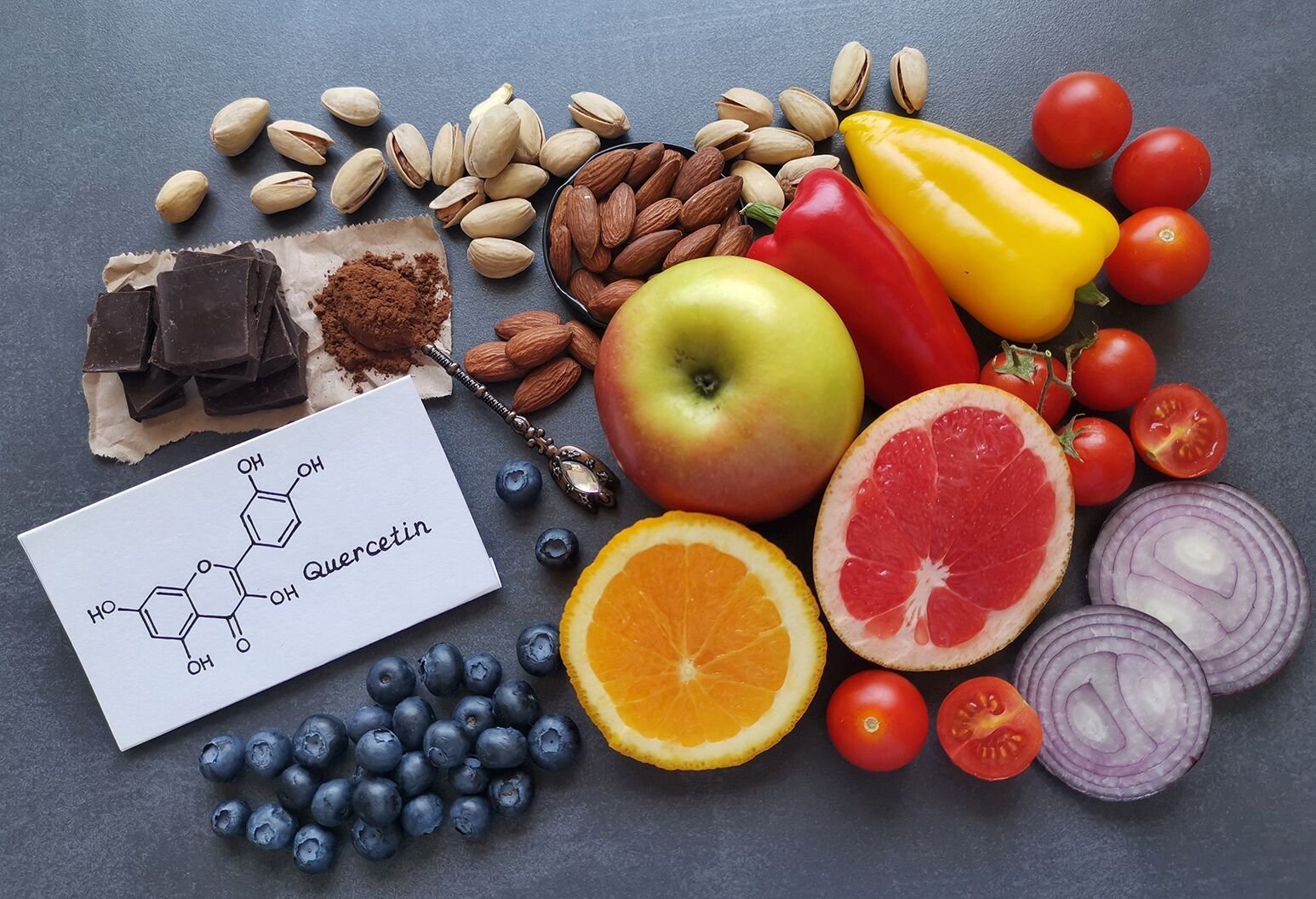
Quercetin is one of the most talked-about supplements in functional medicine right now. It shows up in protocols for histamine intolerance, mast cell reactivity, autoimmune conditions, and seasonal allergies. It is widely available, frequently recommended, and generally considered safe.
It is also a supplement that interacts with several common medications and enzymes in ways that most people taking it have never been told about.
This post covers what quercetin actually does, where the clinical evidence is strong, where it is still emerging, and what you need to know if you are considering taking it alongside prescription medications.
What Quercetin Is and Where It Comes From
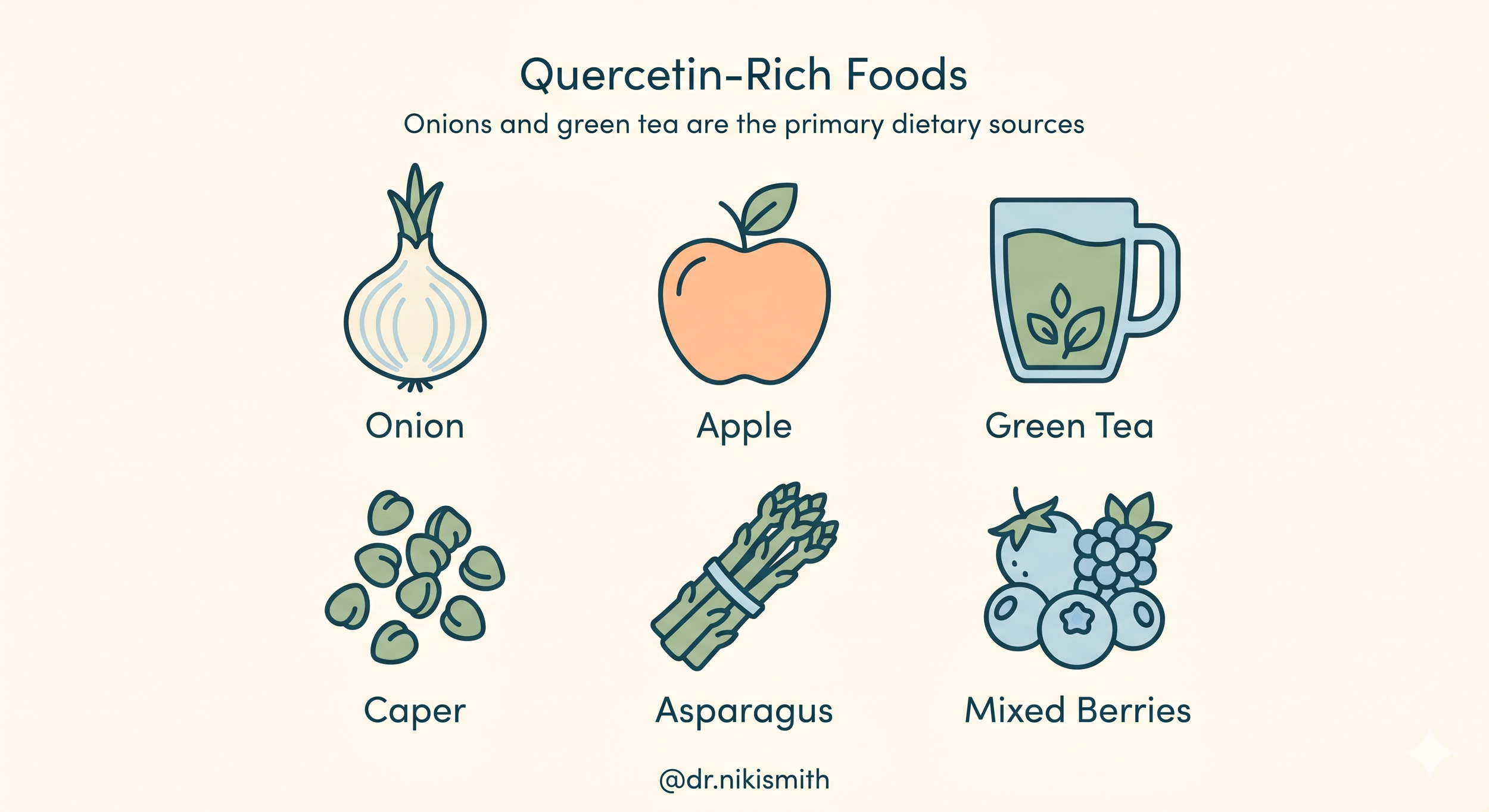
Quercetin is a flavonoid, a class of plant-based polyphenols found widely in fruits, vegetables, and herbs. It is one of the most abundant dietary flavonoids in the human diet. Major food sources include onions, apples, capers, asparagus, red leaf lettuce, berries, and green tea (Nishimuro et al., 2015).
A population-based study estimating daily quercetin intake in Japan found average dietary consumption of approximately 16.2 mg per day, with onions and green tea as the primary sources (Nishimuro et al., 2015). Supplemental quercetin is typically sold in doses of 500 to 1,000 mg per day, representing a significant increase above what is obtained through diet alone.
In the body, quercetin is extensively metabolized. Because of high presystemic biotransformation, it is primarily its conjugated metabolites, including quercetin-3-sulfate, quercetin-3-glucuronide, and isorhamnetin, that appear in circulation rather than the parent compound. This is important when evaluating both its effects and its interactions (Mohos et al., 2020).
Quercetin's poor aqueous solubility and variable oral bioavailability have led to the development of enhanced delivery forms. Lecithin-based formulations have been studied specifically for improved absorption and have shown promise in allergic disease applications, though larger clinical trials are still needed (Naso et al., 2025).
What the Research Shows: Mast Cell Stabilization and Histamine
The most clinically compelling evidence for quercetin centers on its effects on mast cells, specifically its ability to inhibit mast cell degranulation and reduce histamine release.
Mast cells are immune cells found throughout the body, particularly in connective tissue, the gut lining, and the skin. When triggered by allergens, stress, or other stimuli, they release a cascade of inflammatory mediators including histamine, tryptase, prostaglandin D2 (PGD2), and cytokines. In women with PMDD, perimenopause, or histamine intolerance, mast cell reactivity is a clinically relevant driver of symptoms.
The histamine evidence
A classic study of human basophils found that quercetin inhibited antigen-induced histamine release at concentrations of 5 to 50 micromolar, and could interrupt an ongoing release reaction (Middleton et al., 1981). This was one of the earliest demonstrations of quercetin's antihistamine activity in human cells.
A 2012 study published in PLoS ONE compared quercetin and cromolyn, a pharmaceutical mast cell stabilizer, in their ability to inhibit histamine and PGD2 release from human mast cells. Quercetin inhibited both histamine and PGD2 release and was more effective than cromolyn for inhibiting several pro-inflammatory cytokines including IL-8, IL-6, TNF, and IL-1beta (Weng et al., 2012).
A 2006 study in HMC-1 mast cell line found that quercetin suppressed tryptase release, reduced MCP-1 chemokine secretion, and decreased the transcription of histidine decarboxylase, the enzyme responsible for producing histamine. These effects occurred without cytotoxicity at the concentrations tested (Castellani et al., 2006).
Important caveats about the evidence

The majority of this research is in vitro, meaning it was conducted in cell cultures rather than in living humans. A 2025 narrative review in Nutrients examined the full body of evidence on quercetin and allergic diseases and noted that only two human clinical trials have investigated quercetin as a standalone treatment for allergic conditions, both of which reported promising results including symptom reduction and improved quality of life (Naso et al., 2025). The authors concluded that while preclinical evidence is consistent and compelling, larger randomized controlled trials are still needed before definitive clinical conclusions can be drawn.
The appropriate framing is this: quercetin functions as a mast cell stabilizer and inhibits histamine release in cell and animal models, with early but limited human clinical evidence. It is not established as a pharmaceutical-grade antihistamine. But for individuals with histamine sensitivity, mast cell reactivity, or allergic conditions, the mechanistic rationale and preclinical evidence are meaningful.
Quercetin and Autoimmune Conditions
Beyond mast cell stabilization, quercetin has been studied in the context of autoimmune conditions including rheumatoid arthritis, inflammatory bowel disease, multiple sclerosis, and systemic lupus erythematosus.
A 2021 mini-review in Frontiers in Immunology summarized the available evidence and found that quercetin possesses anti-inflammatory, antioxidant, neuroprotective, and anti-allergic properties that may be relevant to autoimmune disease management. The authors noted that quercetin has reportedly attenuated several autoimmune conditions in human or animal models, with treatments at appreciable doses showing low or no toxicity (Shen et al., 2021).
However, the same review was explicit about limitations: there is currently no evidence that quercetin reduces the morbidity or mortality of autoimmune diseases in clinical populations. Direct effects on immune imbalance in patients remain unconfirmed. The underlying mechanisms, while biologically plausible, have been demonstrated primarily in animal models and require clinical validation (Shen et al., 2021).
For women with Hashimoto's thyroiditis, this is worth noting specifically. Quercetin has been shown in vitro to inhibit thyroid peroxidase. However, the safety review by Andres and colleagues found that this inhibitory effect was not replicated in studies involving oral quercetin administration in animal models, suggesting it may not be clinically significant at typical supplemental doses (Andres et al., 2018). That said, if you have Hashimoto's and are considering quercetin, monitoring thyroid markers is reasonable clinical practice.
The Interaction Profile: What You Need to Know Before Taking It
This is where the conversation about quercetin gets more clinically important, and where most supplement discussions fall short.
Quercetin and its metabolites interact with two major classes of pharmacokinetic proteins: cytochrome P450 enzymes and drug transporters. Both affect how medications are absorbed, distributed, and eliminated by the body.
CYP450 enzyme interactions
A 2020 study published in Nutrients examined the inhibitory effects of quercetin and its main metabolites on CYP2C19, CYP3A4, and CYP2D6 enzymes. The findings were more nuanced than the popular narrative often suggests: quercetin and its conjugates showed weak inhibitory effects on CYP2C19 and CYP3A4, while they did not affect CYP2D6 activity (Mohos et al., 2020).
What this means clinically: quercetin's direct CYP450 inhibition at typical supplemental doses is likely modest. This does not mean the interaction is irrelevant, but it does mean that the risk depends significantly on the specific medications involved and individual variation in metabolism.
Drug transporter interactions: the more significant concern
The more clinically significant finding from Mohos and colleagues involves drug transporters rather than CYP enzymes. Quercetin and several of its metabolites were found to be strong inhibitors of OATP1B1, OATP1B3, OATP2B1, and BCRP transporters (Mohos et al., 2020).
These transporters regulate the uptake and efflux of a wide range of medications including statins (such as rosuvastatin and atorvastatin), certain antibiotics, some antidiabetic medications, and several cardiovascular drugs. When these transporters are inhibited, drug concentrations in the blood can increase, potentially raising the risk of side effects or toxicity even at standard doses.
The authors concluded that high intake of quercetin may interfere with the pharmacokinetics of drugs that rely on these transporters, and that this interaction extends to quercetin's circulating metabolites, not just the parent compound (Mohos et al., 2020).
The COMT connection: relevant for your genetics
There is a specific interaction worth naming for anyone who knows their COMT status. Quercetin inhibits catechol-O-methyltransferase (COMT), the enzyme responsible for breaking down catecholamines including dopamine and estrogen metabolites (Wang et al., 2012).
For individuals with slow COMT variants, dopamine and estrogen already clear more slowly. Adding quercetin as a COMT inhibitor could amplify that slowdown. Depending on the individual, this could manifest as increased anxiety, overstimulation, estrogen recirculation, or worsened estrogen dominance symptoms. For someone with fast COMT who clears dopamine too quickly, this same mechanism might actually be beneficial.
This is one of the clearest examples of why genetics-informed supplementation matters. The same supplement can have meaningfully different effects depending on your individual biochemistry.
Medications that warrant extra caution
Based on the available evidence, quercetin supplementation at higher doses warrants particular caution if you are taking:
Statins (rosuvastatin, atorvastatin, simvastatin) due to OATP transporter inhibition
Blood thinners (warfarin) due to potential effects on drug metabolism and transport
Cyclosporine or other immunosuppressants
Certain antibiotics including some fluoroquinolones
Any medication with a narrow therapeutic window where small changes in concentration matter significantly
This is not a comprehensive list. If you are on prescription medications and considering quercetin, a conversation with your prescriber or pharmacist about potential interactions is appropriate before starting.
Safety at Supplemental Doses
For most healthy adults, quercetin at typical supplemental doses (500 to 1,000 mg per day) appears to be well tolerated in short-term human studies. Adverse effects have been rarely reported, and when they have occurred they were generally mild (Andres et al., 2018).
There are a few areas where caution is warranted based on the safety literature:
Long-term safety data at doses above 1,000 mg per day for more than 12 weeks is currently limited in humans. Extrapolating from short-term studies is not straightforward.
Animal studies at very high doses showed nephrotoxic effects in male rats, though this has not been replicated in female animals or in human studies at typical doses.
Some theoretical concern exists regarding estrogen-dependent cancers based on animal data, though this has not been confirmed in human populations.
The thyroid peroxidase inhibition noted in vitro has not been replicated in oral administration studies, but warrants monitoring in Hashimoto's patients.
The current evidence supports quercetin as generally safe at typical supplemental doses for short-term use in healthy individuals without contraindicated medications. The picture for long-term high-dose supplementation or use alongside interacting medications is less clear.
Who Is Quercetin Most Relevant For
Based on the current evidence base, quercetin is most likely to be clinically useful for individuals with:
Histamine intolerance or mast cell reactivity — the mechanistic rationale is strong even though human clinical trials are still limited
Seasonal allergies or allergic rhinitis — two human trials showed symptom reduction with quercetin supplementation
Autoimmune conditions with an inflammatory component, as a supportive measure alongside standard care
Elevated inflammatory markers where anti-inflammatory support is part of the clinical picture
It is less straightforward for individuals who are on multiple prescription medications, have OATP-substrate medications, have known slow COMT variants without clinical guidance, or have active estrogen-dependent conditions.
The key principle is the same one that applies to all functional supplementation: the right supplement for the wrong person at the wrong time can cause more harm than good. Context, genetics, and medication profile all matter.
What This Means Clinically
Quercetin is not a supplement to fear. For the right person in the right context it is clinically interesting, biologically active, and increasingly well-studied. But it is also not something to start casually based on a social media recommendation without understanding your individual picture.
The questions worth asking before supplementing:
What medications are you currently taking, and do any of them rely on OATP transporters or are metabolized through pathways quercetin affects?
Do you know your COMT status? If you are a slow metabolizer, quercetin may amplify dopamine and estrogen accumulation.
What are you hoping quercetin will address? The evidence is strongest for mast cell and histamine-related conditions. If that is not your primary concern, other options may be more targeted.
Have you assessed your gut health? Quercetin's bioavailability is significantly affected by gut microbiome composition and intestinal health.
Testing before supplementing is the functional medicine approach for a reason. It is not about creating barriers. It is about making sure the support you are adding actually fits the system you are trying to support.
Want to Know If Quercetin Is Right for Your Picture?
If you are already on medications or managing a complex hormonal or immune picture, understanding your genetics and current lab status before adding supplements is the most direct path to knowing what will actually help. A free discovery call is a good place to start that conversation.
If you have existing labs and want to understand what they mean in the context of your symptom picture, a Read Between the Labs session is available at $199
References
Andres, S., Pevny, S., Ziegenhagen, R., Bakhiya, N., Schäfer, B., Hirsch-Ernst, K. I., & Lampen, A. (2018). Safety aspects of the use of quercetin as a dietary supplement. Molecular Nutrition & Food Research, 62(1), 1700447. https://doi.org/10.1002/mnfr.201700447
Castellani, M. L., Kempuraj, D., Frydas, S., Theoharides, T. C., Simeonidou, I., Conti, P., & Vecchiet, J. (2006). Inhibitory effect of quercetin on tryptase and MCP-1 chemokine release, and histidine decarboxylase mRNA transcription by human mast cell-1 cell line. Neuroimmunomodulation, 13(3), 179–186. https://doi.org/10.1159/000098131
Middleton, E., Drzewiecki, G., & Krishnarao, D. (1981). Quercetin: An inhibitor of antigen-induced human basophil histamine release. The Journal of Immunology, 127(2), 546–550. https://doi.org/10.4049/jimmunol.127.2.546
Mohos, V., Fliszar-Nyul, E., Ungvari, O., Kuffa, K., Needs, P. W., Kroon, P. A., Telbisz, A., Ozvegy-Laczka, C., & Poor, M. (2020). Inhibitory effects of quercetin and its main methyl, sulfate, and glucuronic acid conjugates on cytochrome P450 enzymes, and on OATP, BCRP and MRP2 transporters. Nutrients, 12(8), 2306. https://doi.org/10.3390/nu12082306
Naso, M., Trincianti, C., Tosca, M. A., & Ciprandi, G. (2025). Quercetin and its lecithin-based formulation: Potential applications for allergic diseases based on a narrative review. Nutrients, 17(9), 1476. https://doi.org/10.3390/nu17091476
Nishimuro, H., Ohnishi, H., Sato, M., Ohnishi-Kameyama, M., Matsunaga, I., Naito, S., Ippoushi, K., Oike, H., Nagata, T., Akasaka, H., Saitoh, S., Shimamoto, K., & Kobori, M. (2015). Estimated daily intake and seasonal food sources of quercetin in Japan. Nutrients, 7(4), 2345–2358. https://doi.org/10.3390/nu7042345
Shen, P., Lin, W., Deng, X., Ba, X., Han, L., Chen, Z., Qin, K., Huang, Y., & Tu, S. (2021). Potential implications of quercetin in autoimmune diseases. Frontiers in Immunology, 12, 689044. https://doi.org/10.3389/fimmu.2021.689044
Wang, P., Heber, D., & Henning, S. M. (2012). Quercetin increased bioavailability and decreased methylation of green tea polyphenols in vitro and in vivo. Food & Function, 3(6), 635–642. https://doi.org/10.1039/c2fo10254d
Weng, Z., Zhang, B., Asadi, S., Sismanopoulos, N., Butcher, A., Fu, X., Katsarou-Katsari, A., Antoniou, C., & Theoharides, T. C. (2012). Quercetin is more effective than cromolyn in blocking human mast cell cytokine release and inhibits contact dermatitis and photosensitivity in humans. PLOS ONE, 7(3), e33805. https://doi.org/10.1371/journal.pone.0033805
